What We Do

Services

Every job below covers the prep work and finish details that decide whether a slab lasts.

HomeServices

Everything we take on

Every job below is one we do ourselves across Port Orange.

Concrete Driveways

A driveway carries more weight and more traffic than any other slab on a property. Most driveways here get a 4 to 6 inch base of compacted stone, with rebar instead of wire mesh under any section that'll see a truck or trailer. Control joints get cut within a day of the pour, before the concrete decides where to crack on its own.

Concrete Patios

Patios don't carry vehicle loads, so a thinner slab works and there's more room to lean into finish options like broom, stamped, or exposed aggregate. Every patio gets a slight slope away from the house so water doesn't pool against the foundation. Most are walkable in two to three days and take full weight in about a week.

Stamped Concrete

Stamped concrete gets the look of pavers or flagstone without the joints where weeds and ants get in. Color goes in as an integral pigment or a broadcast release, then the pattern gets stamped while the concrete is still plastic, usually within an hour or two of the pour. Sealing it afterward keeps the color from fading under direct Florida sun.

Concrete Repair

Cracked slabs, sunken sections, and spalling concrete each need a different fix, not the same patch job applied to everything. A hairline crack might just need routing and sealing, while a sunken slab usually means the sub-base washed out from underneath. Some sections need to be cut out and repoured instead of patched, since a patch rarely matches or holds long term.

Concrete Slabs

Shed pads, garage floors, and equipment slabs all need a base that's compacted and level before any concrete goes down. Thickness and reinforcement get set based on the load it'll carry, a shed slab doesn't require the same spec as one holding a car lift. Getting the grade right before the pour matters more than most people expect.

Sidewalks & Walkways

Walkways see a lot of foot traffic and edge exposure, so the broom finish gets attention for slip resistance, especially near pools. Expansion joints go in where a walkway meets a driveway or patio so the two sections can move independently. A poorly jointed walkway is usually the first thing on a property to crack.

Concrete Steps & Porches

Steps have to hit code on rise and run, checked against the house before pouring, not after. Porches often tie into an existing structure, so they get isolated with an expansion joint so the porch can settle on its own without cracking the house slab. Getting the forms square matters more here than on a flat pour.

Pool Decks

Pool decks sit at the edge of chlorinated water and full sun, so the finish needs enough texture to stay slip resistant when wet. Coping and expansion joints around the pool shell get detailed carefully so the deck can move without cracking into the pool structure. Light-colored finishes help keep the deck from getting too hot to walk on barefoot.

Concrete Resurfacing

Resurfacing puts a thin overlay over an existing slab that's worn or discolored but still structurally sound. It won't fix a slab that's cracked from a bad sub-base, that has to get dealt with first or the crack comes right back through the overlay. It's a solid option for a driveway or patio that just looks tired but isn't actually failing.

Retaining Walls

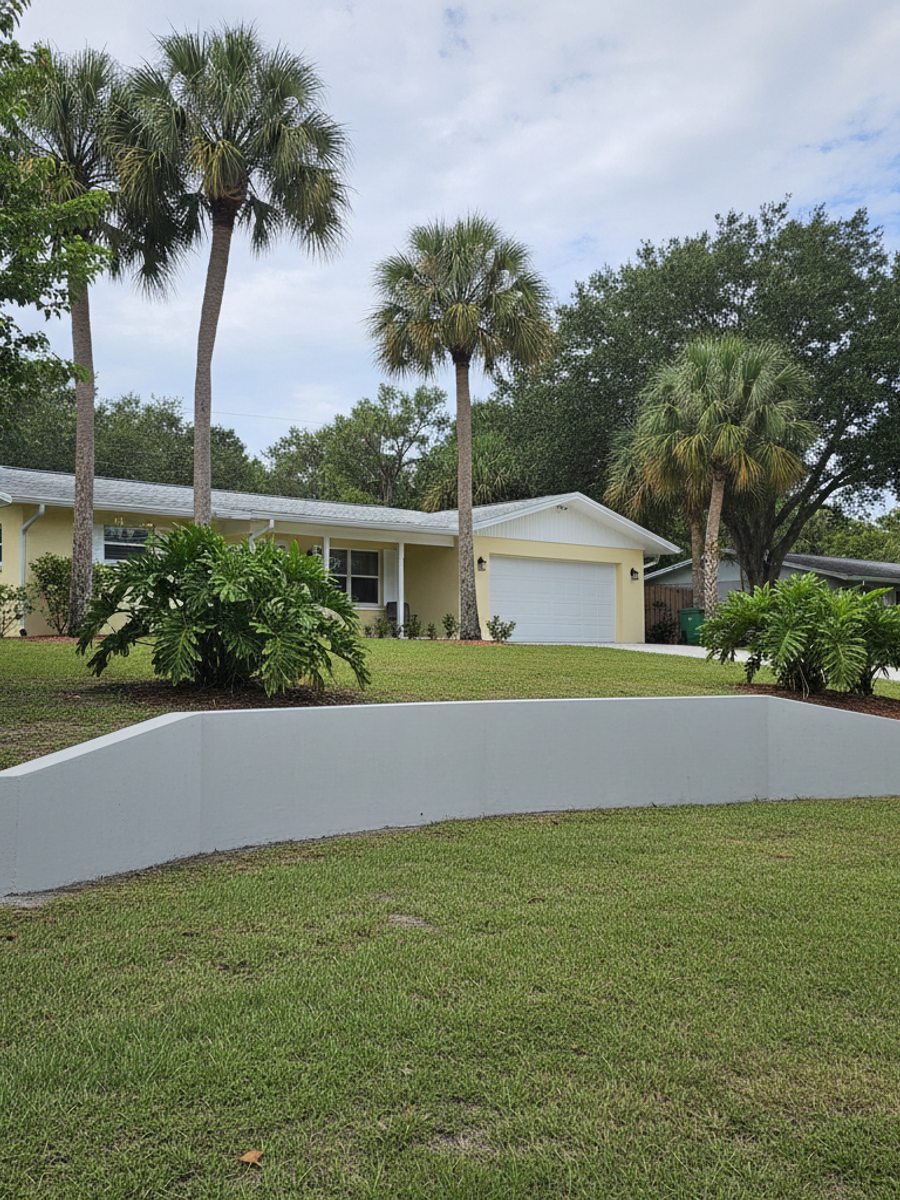
Retaining walls hold back soil on sloped lots, which shows up more than people expect near drainage ditches and canals in this area. Poured concrete or block gets used depending on wall height and what it's holding back. Drainage behind the wall matters as much as the wall itself, since one without weep holes or gravel backfill will eventually push out.

How It Works

Four steps, and no surprises in any of them.

01

We come and look

You tell us what you want doing, we look at what is actually there, and we ask the awkward questions early.

02

You get a price

In writing, itemised, free. If something might add cost later we flag it now rather than at the end.

03

We do the work

Same crew throughout. We cover your floors, keep the dust down and tidy up before we leave each day.

04

We walk it with you

You point out anything you are not happy with and we fix it before the invoice, not after.

Where We Work

All of this, across Port Orange, FL

Concrete work extends throughout this stretch of the Florida coast.

Port Orange, FL
Deltona, FL
Palm Coast, FL
Daytona Beach, FL
Ormond Beach, FL
DeLand, FL
New Smyrna Beach, FL
Edgewater, FL
South Daytona, FL
Holly Hill, FL
DeBary, FL
Common Questions

Things worth asking

Questions that tend to come up once a project actually gets underway.

Is a permit needed for a new driveway or patio?
Most new concrete slabs, including driveways and patios over a certain size, require a permit in Port Orange and unincorporated Volusia County. Permit requirements depend on square footage and whether the slab ties into drainage or setback rules. Pulling the permit and scheduling the inspection is handled as part of the job.
How long does a concrete driveway take to install?
Forming and pouring a standard driveway usually takes one to two days on site, depending on size and whether the old driveway has to come out first. Concrete needs about three to five days before it can handle light foot and vehicle traffic, and closer to a week before heavier loads. Full cure strength takes around 28 days, though the driveway is usable well before that.
Can concrete work stay within a set budget?
A budget number up front helps narrow down finish options, slab thickness where it's not load-bearing, and whether stamping or a plain broom finish makes more sense. Cutting corners on base prep or reinforcement to hit a number isn't something a reputable concrete contractor should do, since that's where cracks come from later. Adjusting size or finish is a better way to control cost than cutting what's underground.
Is there a guarantee on the work?
Workmanship guarantees vary by contractor and job type, and the specifics get spelled out in the written quote before work starts. Concrete itself carries no guarantee against all cracking, since some shrinkage cracking is normal even in a well-poured slab. What a reputable contractor guarantees is that the slab was poured, reinforced, and jointed correctly for its intended use.
Who handles the day-to-day communication during a project?
The same crew that does the site visit and quote handles the pour and finish work. One point of contact makes it easier to answer questions about timeline or changes mid-project. Sub-contracted crews that change from job to job are common in this trade and worth asking about directly.
What materials get used in a typical concrete pour?
Standard concrete mix for driveways and patios typically runs 3,000 to 4,000 PSI, with the higher strength reserved for anything carrying vehicle weight. Reinforcement is either welded wire mesh or rebar, with rebar preferred under driveways and heavier slabs. Sealers, colors, and stamp patterns for decorative work get chosen based on the specific project.
Can the driveway still be used while work is happening?
Driveway access gets cut off from the time the old slab is removed until the new one cures enough for vehicle weight, usually five to seven days total. Parking on the street or in a temporary spot is worth planning for during that window. Living in the house isn't affected for most jobs, since the work stays outside.
How should a site be prepared before the pour?
Clearing the area of vehicles, furniture, potted plants, and anything else sitting on or near the work area speeds up setup. Sprinkler heads and shallow irrigation lines in the path of the slab need to be flagged or capped ahead of time. Everything else, including old concrete removal and grading, gets handled as part of the job.
What happens if something unexpected turns up once old concrete is removed?
Removing an old slab sometimes uncovers a soft spot, old tree roots, or a drainage issue that wasn't visible before, and that changes the sub-base work required. Any change like that gets discussed and priced before moving forward, not added to the bill afterward as a surprise. This is more common on repair and replacement jobs than on new pours over undisturbed ground.
How should new concrete be cared for after the pour?
New concrete needs to stay damp for the first several days while it cures, usually managed with a curing compound sprayed on right after finishing. Avoiding heavy vehicle weight for the first week and full traffic for closer to a month protects the slab while it reaches full strength. Sealing a driveway or patio every few years helps resist staining and surface wear afterward.

Not sure what you need?

Describe the problem and we will tell you what it probably is. No obligation.

Call (386) 999-3519